
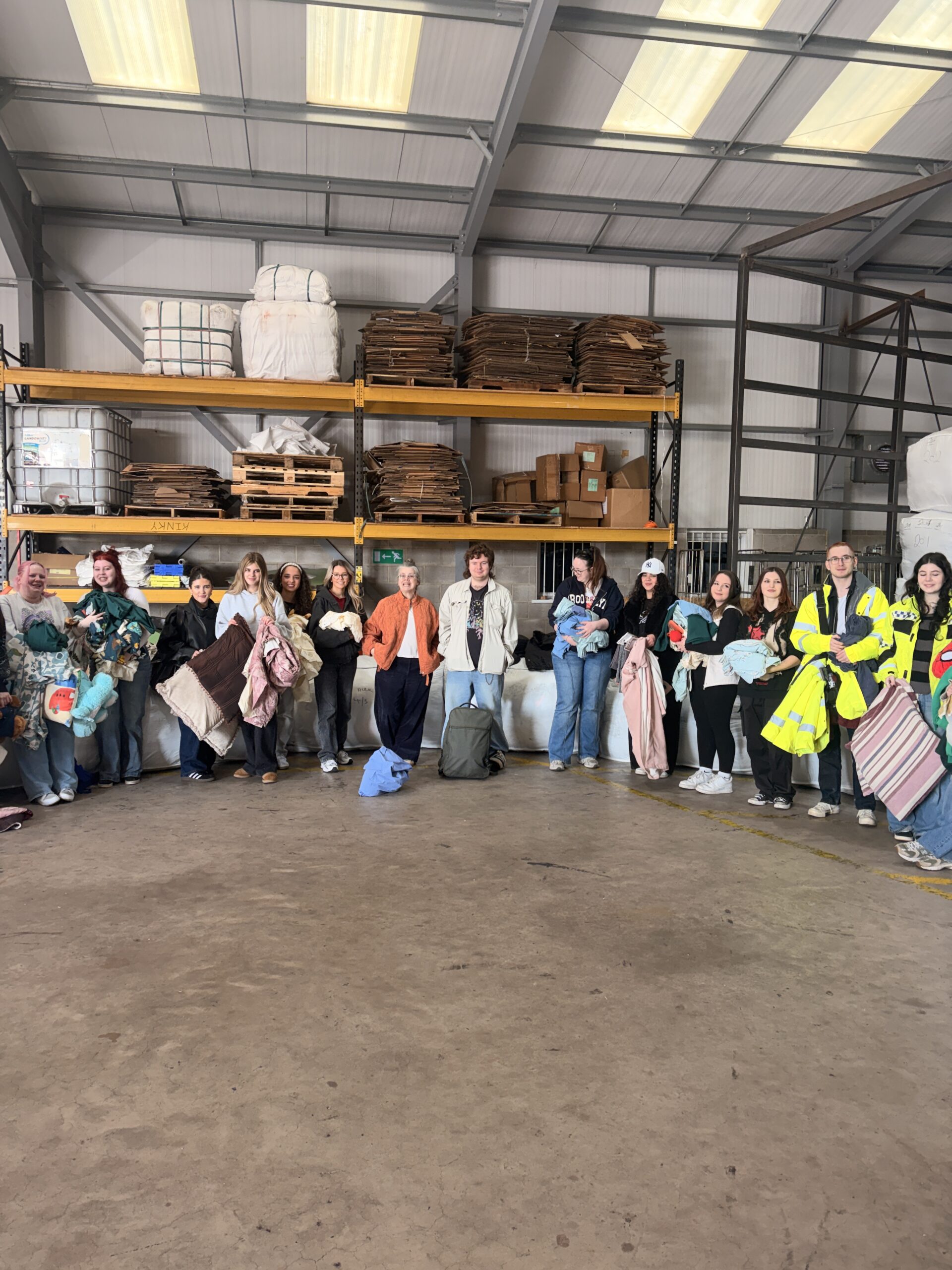
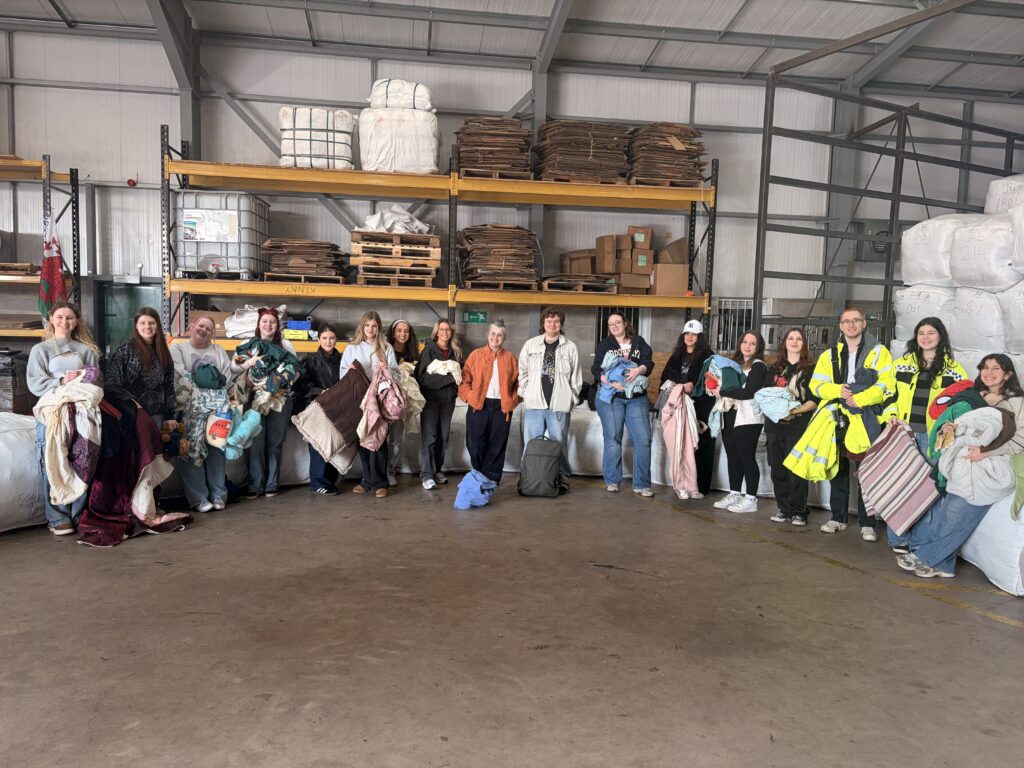
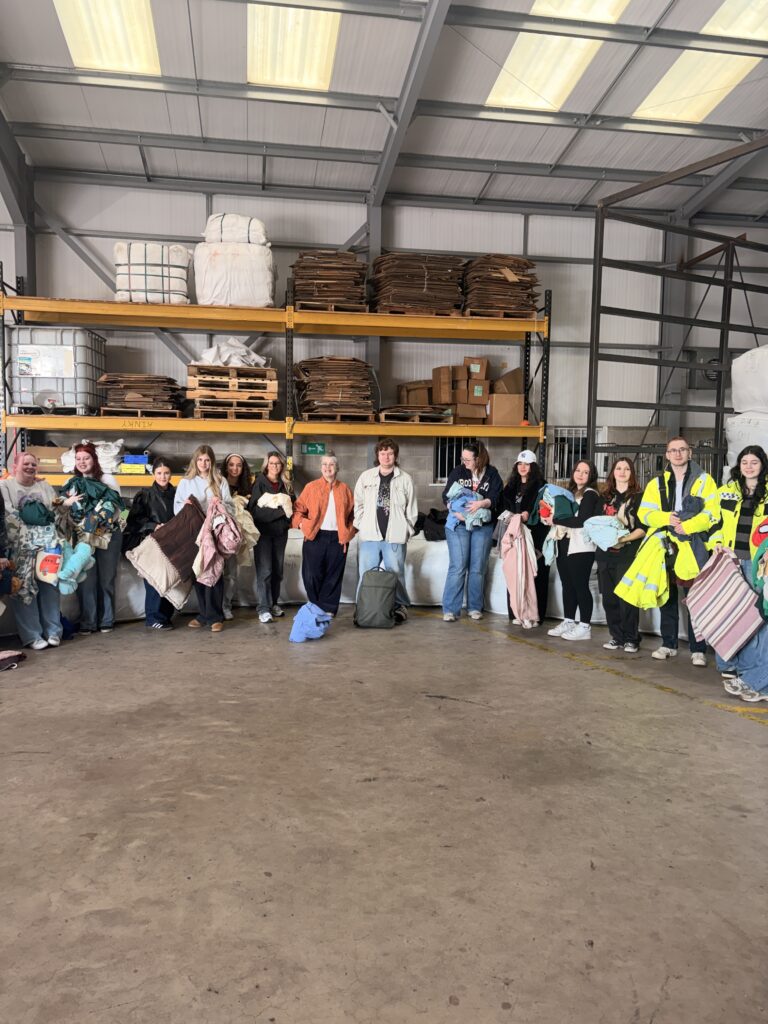
Fashion students from the University of South Wales were recently invited to visit Roberts Recycling Ltd’s Cardiff operations, to gain behind-the-scenes insight into textile reuse and the circular economy.
lectures TO real-life
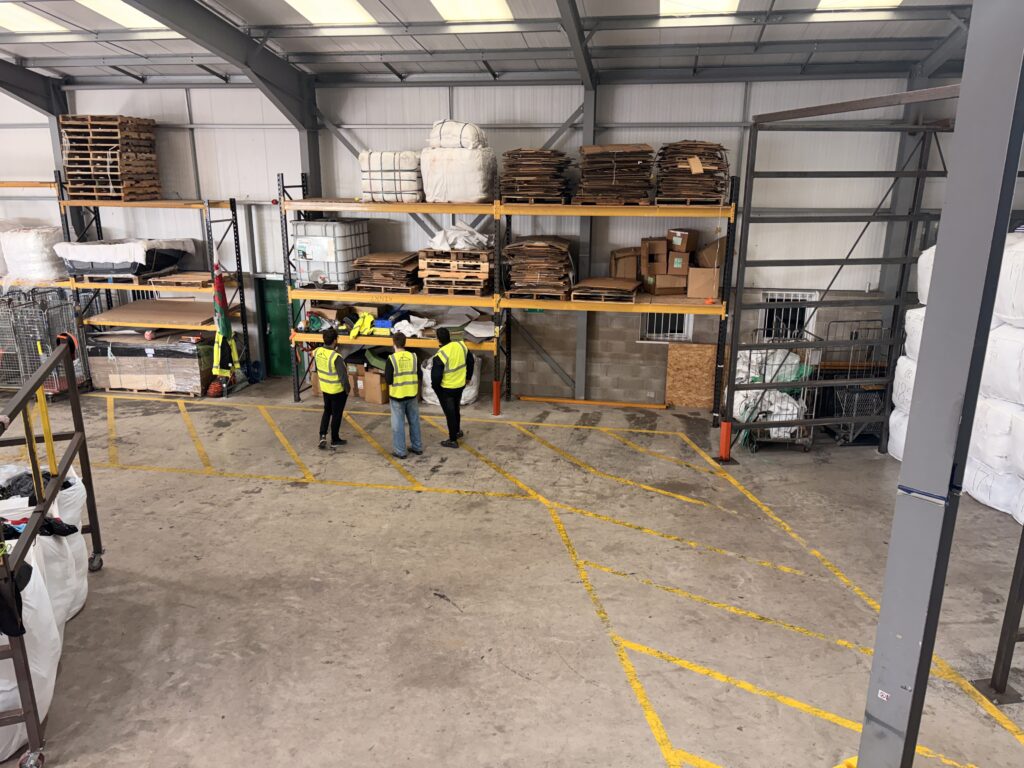
Set against the backdrop of a live operational site, the talk was delivered in a makeshift lecture space formed from clothing bales, offering a unique and immersive learning environment.
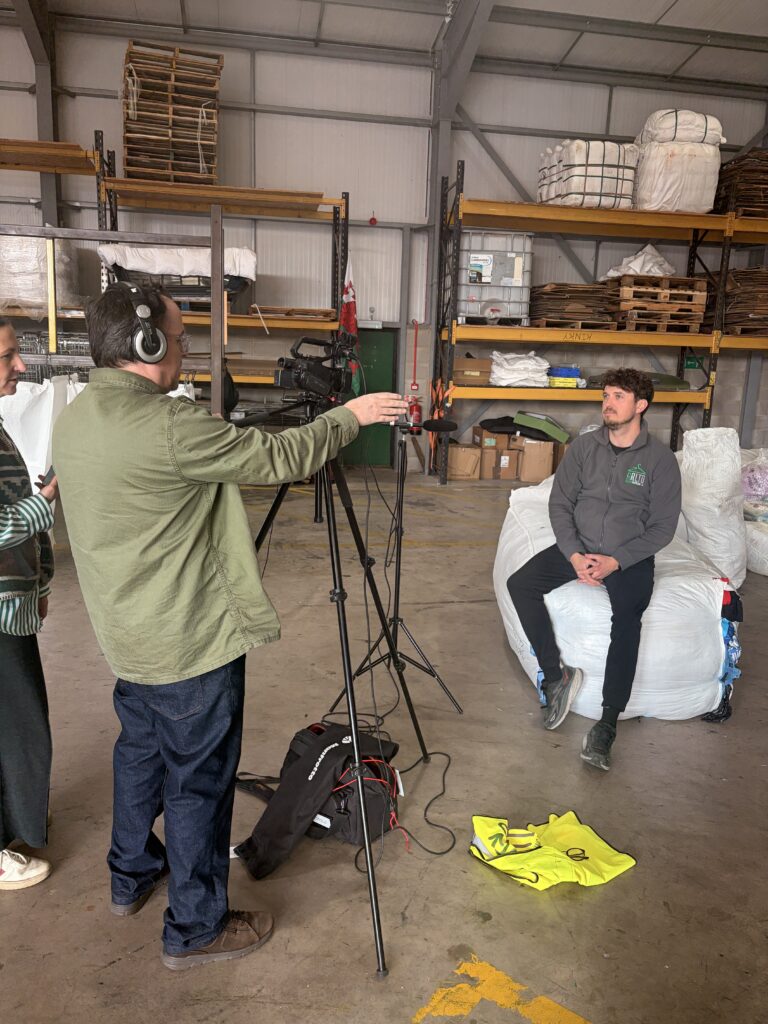
Roberts Recycling Director Paul Roberts, Marketing Lead Lewis Webster and Cardiff Site Manager Josh led a Q&A session, exploring the challenges of managing post-consumer textiles and the importance of prioritising reuse within the circular economy.
Students were introduced to the complexities of sorting, grading and preparing clothing for its next stage, gaining a clearer understanding of how reuse systems operate in practice.
INNOVATION IN TEXTILE REUSE
Alongside the operational insight, the team highlighted some of the innovative solutions being developed within the sector.
This included Roberts Recycling’s Textiles-to-MDF partnership with Fab Materials, where non-reusable textile fibres are repurposed into construction-grade boards, demonstrating how materials traditionally considered waste can be transformed into valuable new products.
The discussion reinforced how innovation continues to play a key role in reducing textile waste and supporting the transition towards more circular systems.
INDUSTRY AND EDUCATION COLLABORATION
The visit welcomed University representatives Jayne Barne, Jennifer Whitney, Sally Phillips and Steven Wright SFHEA, supporting a collaborative exchange between education and industry.
By opening up operational environments to students, Roberts Recycling aims to provide greater transparency around the textile reuse process and inspire the next generation to engage with sustainability and circular economy thinking.
Paul Roberts said:
“We were delighted to welcome the University of South Wales team to our Cardiff operations. We hope it offered a practical, real-world perspective on what happens to clothing once it reaches the end of its usable life, connecting academic study with the realities of the textile reuse industry. We’re really excited about future collaborative projects with the University over the coming months.”